
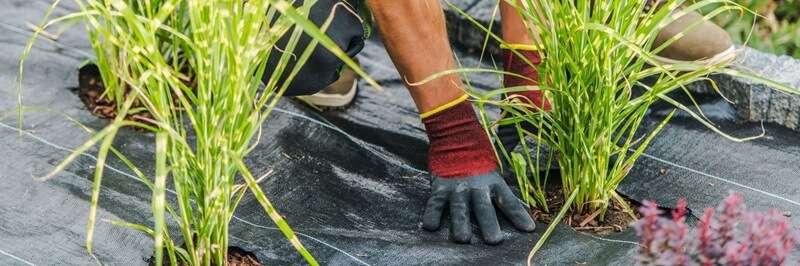
Geotextiles are an essential addition to many civil and environmental engineering processes. Depending on your surface, the woven or unwoven option may be a better fit for the purposes you need it for.
What Are Geotextiles?
Geotextiles are permeable, synthetic fabrics which are utilised in combination with soil, rock and other geotechnical materials to improve the performance of civil and environmental engineering projects. Usually constructed from polypropylene or polyester, they are designed to interact with the soil in specific ways.
What They Do
One of the things geotextiles are used for is to prevent different soil types from mixing. This can include keeping aggregate soil separate from soft sub-base, for example. They can also be used to filter water through the surface while retaining soil particles, and carry water within the plane of the fabric in order to relieve water pressure. Geotextile fabrics can also provide tensile strength to soil, improving its load-bearing capacity, and can protect geomembranes and other materials from puncture or damage.
Woven Geotextiles
Woven geotextiles are developed by interlacing yarns in two directions: warp (longitudinal direction) and weft (transverse direction). Common yarn types include monofilament, which offers better filtration, high-strength multifilament, and slit film (tape) which comes with flat, extruded strips.
Woven geotextiles are very strong, with typically a 20-200+ kN/m in tensile strength. They have a low level of elongation (around 5-25%), which provides stiffness and load transfer, ideal for minimising rutting in roadways. Their high modulus (or stiffness) enables woven geotextiles to bridge weak soils, which is essential for reinforcement and stabilisation.
However, their hydraulic properties have some limitations, with a lower permeability than non-woven geotextiles as water flow occurs mainly through openings between yarns.
The primary functions of woven textiles are to prevent the intermixing of aggregate and subgrade soil, maintain the structural integrity of base layers, and improve the bearing capacity of various soils and surfaces.
Non-Woven Geotextiles
In contrast to woven geotextile membranes, our range of non-woven geotextiles are made from continuous or staple fibres that are randomly oriented and bonded together.
Though this geotextile fabric is lower in tensile strength, it has high elongation levels (40-100%) which allows the fabric to conform to irregular ground and absorb stress without tearing. As a result of its thick, fibrous structure, non-woven fabrics have excellent puncture and tear resistance, which is ideal for protecting geomembranes.
With non-woven geotextiles, one of their main purposes is to facilitate filtration behind retaining walls, around subsurface drains and pipes, and under riprap and erosion control layers. The impressive drainage applications and capabilities allow in-plane and cross-plane water movement, reducing water pore pressure. Additionally, providing the loads are light to moderate, it can prevent the encroachment of soil into any aggregate layers.
Our non-woven Terram Geotextiles are specifically designed to improve the longevity and performance of soft ground during construction projects. The fabric serves as a barrier between initial fill layers and additional layers of material. By preventing the mixing of different sub base materials while allowing water to pass through, soil stability and drainage are both significantly improved.
Why use geotextiles?
Woven and non-woven geotextile fabrics can benefit engineering projects immensely. While woven fabrics work well on construction platforms, railways, and embankments over soft soils as a result of their excellent load distribution, non-woven fabrics work well for erosion control on slopes and channels, as well as retaining wall backdrains. When placed in the right environment, fabric types can can work wonders for your engineering projects.
For information and advice about our geotextiles, contact a member of our team today.

