
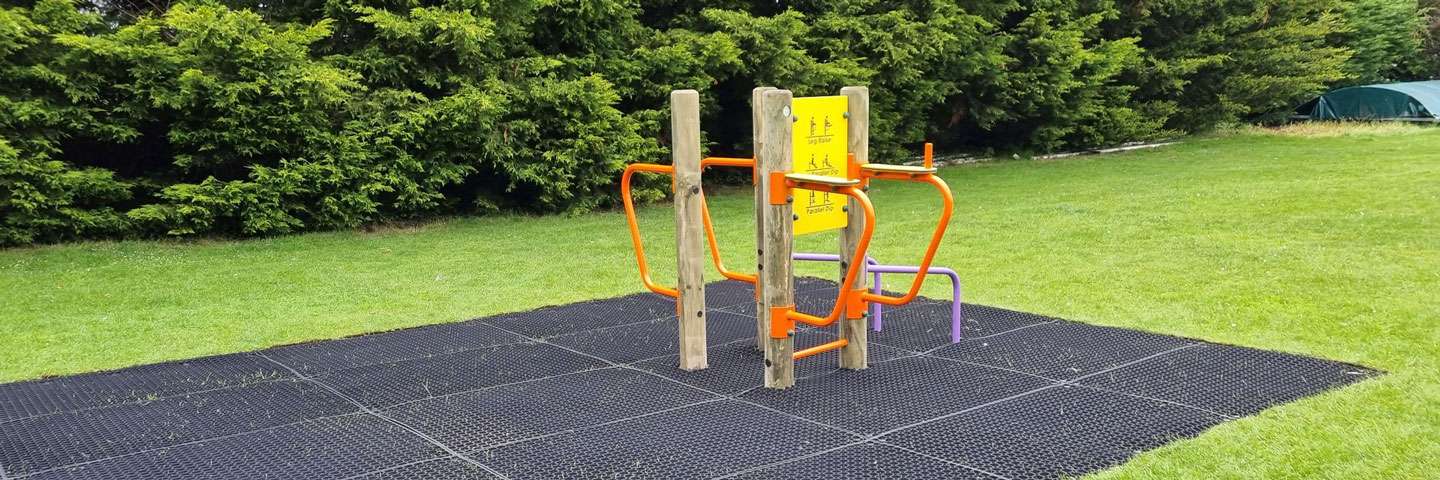
When designing or upgrading outdoor areas such as playgrounds, parks or pathways, safety should always be considered. Grass mats are often chosen for their key benefits: a natural look, ease of installation and grass protection properties. However, to ensure that these benefits don’t come at the cost of user safety, it’s recommended that grass mats comply with specific slip resistance standards, in the UK, this is covered by the British Standard BS EN 13036-4:2011.
What is BS EN 13036-4:2011?
BS EN 13036-4:2011 is a European standard that sets out the method for measuring slip resistance for surfaces using the Pendulum Test. This standard is widely recognised as a reliable method for assessing how slippy a surface is, especially when wet, which is critical for outdoor environments where weather resistance is necessary.
The test method measures the friction between a standard rubber slider and the surface, producing a Pendulum Tester Value (PTV). A higher PTV indicates greater slip resistance. Generally, for outdoor pedestrian areas, a PTV of 36 or above is considered to offer a low slip potential.
Our Slip Resistance Certification
Our grass mats are manufactured from durable recycled rubber, designed to be laid over existing grass or soil. When properly installed and maintained, they allow natural grass to grow through, maintaining a natural look while providing a stable walking surface that can withstand heavy use.
Where a Pendulum Test Value of 36 or more is generally considered to be good, our grass matting has been rated 92 in dry conditions and 60 in wet conditions, so that you can have confidence that the ground is safe to walk on, even in wet conditions.
Why Adhering to Slip Resistance Standards Matters
Failing to meet slip resistance standards can lead to:
- A higher risk of slips and falls, especially in wet weather
- Non-compliance with British standards for surface safety
- Potential injury claims and associated legal costs
- Insurance complications in the event of an accident
To avoid these risks, it’s important to choose surfacing that has been tested to BS EN 13036-4:2011 and to verify that the level of slip resistance is suitable for its intended use. For playgrounds, walkways, outdoor events or any public access areas, surfaces must continue to be slip resistant, year round.
Maintaining Slip Resistance
Even the best surfacing can require regular care to maintain its slip resistance over time. For grass mats, this means ensuring they stay clean, free-draining and unobstructed by debris. Regular sweeping and the occasional use of jet washing equipment can help to prevent the accumulation of organic matter that might otherwise reduce the effectiveness of the mat’s slip resistance.
It’s also essential to inspect your grass mats periodically for signs of wear. Heavy foot traffic, weather changes, or poor drainage can sometimes cause mats to lift or shift, creating trip hazards as well as compromising slip resistance. By securing any loose areas promptly and checking that the underlying ground remains level, you can help to maintain a stable and safe walking surface for all users.
Drainage plays a vital role in keeping grass mats slip-resistant. Standing water is one of the leading causes of slips and falls outdoors, so it’s important to ensure that water can drain freely through and beneath the mats. To prevent water from pooling, periodically check that the soil remains permeable, clear any obstructions and consider aerating the ground beneath if necessary.
Grass Mats for Peace of Mind
By choosing grass mats that meet BS EN 13036-4:2011, you’re investing in safer outdoor spaces for everyone, from children running in playgrounds to adults using garden paths or public walkways. If you have any questions about our slip resistance certifications or want additional information on the best installation methods, our friendly team is always available.

